
When it comes to maintaining a commercial parking lot, many property managers ask the same question: Do I need power sweeping or pressure washing—or both?
The answer isn’t always obvious, but choosing the right service at the right time can make a significant difference in curb appeal, safety, compliance, and long-term pavement health.
Power sweeping and pressure washing serve different purposes. Understanding how they work—and when each is necessary—helps commercial property managers protect their investment, reduce liability, and maintain a professional appearance year-round.
Why Parking Lot Maintenance Matters More Than You Think
Your parking lot is often the first and last thing visitors see. Whether you manage a retail center, medical facility, industrial site, HOA, or office campus, the condition of your lot directly affects:
- First impressions and brand perception
- Pedestrian and vehicle safety
- Pavement lifespan and maintenance costs
- Environmental compliance and stormwater regulations
- Complaints from tenants, customers, or boards
Routine exterior maintenance isn’t cosmetic—it’s preventative. And that’s where power sweeping and pressure washing come in.
What Is Power Sweeping?
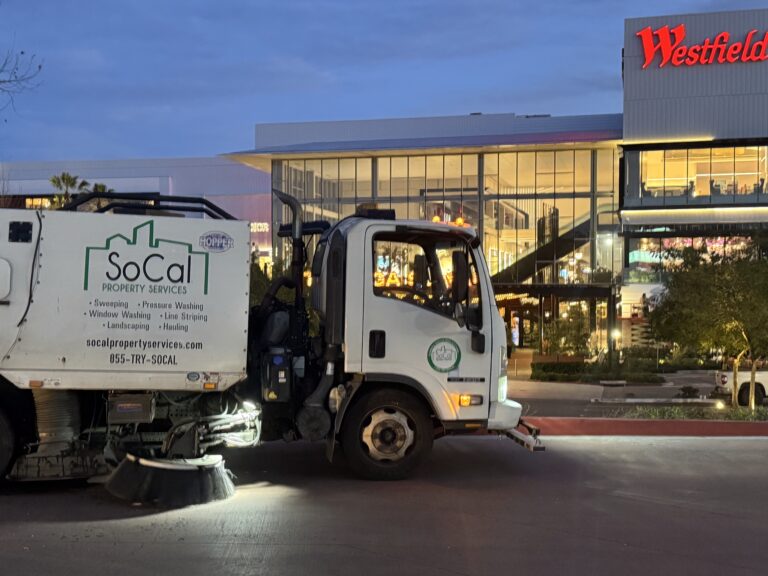
Power sweeping is the routine removal of loose debris from parking lots, drive lanes, curbs, and paved surfaces using industrial sweeping equipment.
What Power Sweeping Removes
- Dirt and dust
- Leaves and organic debris
- Trash and litter
- Gravel and sediment
- Sand buildup from wind or storms
How Power Sweeping Works
Professional power sweepers use mechanical brushes and vacuum systems to lift debris from the pavement and collect it efficiently—without spreading dust or pushing debris into storm drains.
Benefits of Regular Power Sweeping
- Maintains a clean, professional appearance
- Prevents debris from breaking down pavement surfaces
- Reduces slip-and-fall risks
- Supports stormwater compliance by limiting pollutant runoff
- Extends the life of asphalt and striping
Power sweeping is the foundation of parking lot maintenance. It’s best scheduled on a recurring basis—weekly, biweekly, or monthly—depending on traffic and property type.
What Is Pressure Washing?
Pressure washing uses high-powered water to remove stubborn buildup that sweeping alone cannot address.
What Pressure Washing Removes
- Oil and grease stains
- Algae and mold growth
- Gum and sticky residue
- Ground-in dirt
- Food waste and bio-contaminants
Where Pressure Washing Is Most Effective
- Sidewalks and walkways
- Entryways and storefronts
- Dumpster pads and trash enclosures
- High-traffic drive lanes
- Parking stalls with oil staining
Pressure washing is a deep-clean solution. It restores surfaces that have absorbed grime over time and addresses safety and hygiene concerns that sweeping cannot resolve.
Power Sweeping vs. Pressure Washing: Key Differences
| Power Sweeping | Pressure Washing |
|---|---|
| Removes loose debris | Removes embedded grime |
| Preventative maintenance | Corrective deep cleaning |
| Ideal for recurring service | Ideal for periodic service |
| Supports stormwater compliance | Improves safety and sanitation |
| Extends pavement lifespan | Restores appearance |
They aren’t interchangeable. One doesn’t replace the other—they work best together.
When Your Lot Needs Power Sweeping
Your property likely needs regular power sweeping if you notice:
- Accumulating dirt or debris between cleanings
- Trash collecting along curbs or corners
- Complaints about appearance
- Increased sediment near storm drains
- Early wear on asphalt surfaces
Most commercial properties in Southern California benefit from routine sweeping due to wind, traffic, and dry conditions that constantly deposit debris.
When Pressure Washing Is the Right Call
Pressure washing becomes essential when:
- Oil stains make the lot look neglected
- Algae or mold create slippery conditions
- Sidewalks appear dark, stained, or uneven
- Dumpster areas emit odors or attract pests
- Property inspections or board reviews are coming up
If sweeping improves cleanliness but surfaces still look dirty, pressure washing is the next step.
The Smart Approach: Combining Both Services
High-performing commercial properties don’t choose between power sweeping and pressure washing—they use both strategically.
A Proactive Maintenance Plan Looks Like:
- Routine power sweeping to prevent buildup
- Scheduled pressure washing for deep cleaning
- Targeted washing after storms, spills, or heavy use
- Seasonal adjustments based on weather and traffic
This approach reduces emergency cleanups, limits long-term damage, and ensures your property always looks maintained—not just occasionally cleaned.
Why Professional Service Makes the Difference
Not all sweeping and washing services are equal. Professional providers bring:
- Commercial-grade equipment
- Trained, accountable crews
- Environmental compliance knowledge
- Proof of service documentation
- Consistent scheduling and follow-through
At SoCal Property Services, we don’t guess—we evaluate. Our team conducts site walkthroughs to determine what your lot actually needs and when, so services are effective, efficient, and aligned with your property goals.
Protecting Your Property and Your Reputation
Power sweeping and pressure washing aren’t just about cleanliness. They protect:
- Your pavement investment
- Your tenants’ experience
- Your safety record
- Your professional reputation
Neglected lots signal neglect elsewhere. Well-maintained lots send a clear message: this property is managed with care.
Power Sweeping vs Power Washing
If you’re deciding between power sweeping and pressure washing in SoCal, the real answer is understanding what problem you’re solving.
- Choose power sweeping for routine maintenance and prevention
- Choose pressure washing for deep cleaning and restoration
- Choose both for long-term property protection
When your exterior maintenance is handled proactively, everything runs smoother—and you don’t have to think about it.
That’s the difference between reactive cleaning and professional property care. Call SoCal Property Services today for your free site walk.